
February at Krasi: epirus–Where Greece Gets Quiet, Wild, and Honest
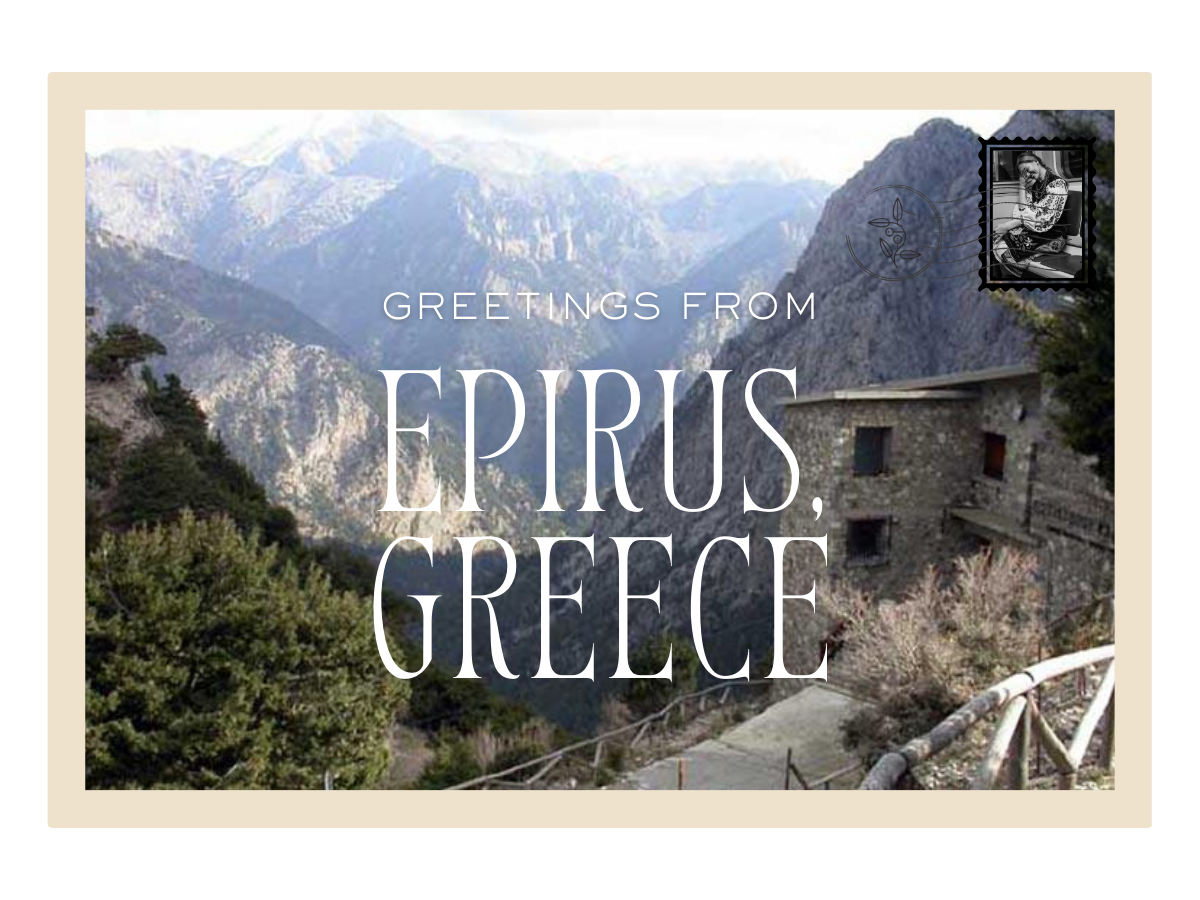
If January took us north of the map, February takes us somewhere even more elemental.
Welcome to Epirus — Greece at its most rugged. A region shaped by mountains, mist, and time, where food was never about abundance or excess, but about making something deeply satisfying out of very little. This is a land of shepherds and stone villages, of rivers cutting through deep gorges, of pies baked to feed many and wines made to endure harsh winters.
Epirus doesn’t shout.
It doesn’t need to.
It just is.
This month at Krasi, we’re honoring Epirus through dishes built on dairy, grain, and patience — and wines born from high altitude, limestone soils, and generations of quiet resilience.
A Region Built by Stone, Sheep, and Survival
Tucked into northwestern Greece, Epirus is one of the country’s most isolated and dramatic regions. The Pindus Mountains dominate the landscape, with deep valleys, fast-moving rivers, and villages that seem carved directly from stone. Life here was never easy — and that reality shaped everything.
Shepherding defined the economy.
Dairy defined the cuisine.
Community defined survival.
This is the birthplace of some of Greece’s most iconic savory pies, the home of haunting polyphonic folk songs, and a region that prizes substance over spectacle. Olive oil plays a smaller role here; butter, cheese, and flour take center stage. Food is practical, grounding, and meant to be shared.
Epirus is Greece without the postcard gloss — and that’s exactly the point.
In the Glass: High Altitude, High Character
Epirus wines are terroir-driven and unapologetically distinctive. Grown at high elevations on limestone soils, they carry natural acidity, tension, and restraint — wines shaped by cold winters and short growing seasons.

This month’s wine program explores grapes you don’t see often: Debina, Vlahiko, Bekari, Moschomavro, and ancient expressions of Xinomavro once known locally as Popolka. These are wines that feel alive — crisp, savory, and deeply connected to place.
From still whites and mountain reds to historic sparkling styles born out of necessity, Epirus proves that quiet regions often have the most to say.
If you like wines with edge, freshness, and a story worth hearing — this is your month.
Somm note
Epirus wines don’t perform on the first sip. They reveal themselves slowly.
Which makes them natural partners for food built on time and restraint.

pair it like a pro
-
Feta, caramelized onion, thyme
Why this exists
Epirus is Greece’s great pie region, and alevropita is its most stripped-down expression. No phyllo, no layers, no excess. This was everyday food for shepherd families — fast, filling, and built from staples that were always on hand.How we make it at Krasi
A simple batter is poured directly into a hot, well-oiled pan so it crisps immediately on contact. The interior stays soft and custardy while the edges develop structure. Feta and onion do the heavy lifting.Chef note
This is pie culture at its most honest.Pair it with
Glinavos Debina “Protos Inos” PDO Zitsa 2021Somm note
High acid and salinity cut through the feta while keeping the dish light and balanced.If you like
Aligoté or dry Muscat
You’ll like Debina. Crisp, restrained, quietly precise.
-
Sheep’s milk butter, wild mushrooms, Metsovone
Why this exists
Trahanas was survival food in Epirus. Made once a year, dried, and relied on through long winters, it reflects a region built on preparation and patience. Butter, grain, and dairy were sustenance — not indulgence.How we make it at Krasi
The trahanas is simmered slowly until creamy but structured. Sheep’s milk butter is folded in at the end. Mushrooms are cooked separately to deepen flavor, and Metsovone adds a subtle smoked finish.Chef note
This dish is about nourishment, not decoration.Pair it with
Vaimaki Xinomavro “Kokkineli” EO Greece 2021Somm note
Fresh red fruit and gentle structure balance the butter and smoke without overwhelming the grain.If you like
Beaujolais or lighter Italian reds
You’ll like Kokkineli. Old-school, drinkable, deeply useful.
-
Slow-cooked lamb, potatoes
Why this exists
Kleftiko cooking comes from necessity — sealed, low-oxygen cooking designed to hide smoke and stretch time. In Epirus, this method aligned naturally with mountain life and pastoral cooking, where restraint mattered more than seasoning.How we make it at Krasi
The lamb is sealed and cooked low and slow until it collapses. Potatoes roast alongside it, absorbing rendered fat and aromatics. The dish relies on time, not intensity.Chef note
Let the lamb speak.Pair it with
Glinavos Vlahiko PGI Ioannina 2021Somm note
High acid and firm tannins cut through richness while keeping the pairing grounded and clean.If you like
Cool-climate Pinot Noir or Piedmont reds
You’ll like Vlahiko. Structured, savory, and quietly serious.
Symposium Wednesdays: The Conversation Continues
Our version of the ancient symposium. Same idea. Better lighting.
Wednesday, February 4
Taste of the Region
A foundation night focused on Epirus itself. Classic producers, indigenous grapes, and the core identity of the region — Debina, Vlahiko, and wines shaped by altitude, limestone, and long winters.
Wednesday, February 11
Siatista & Eastern Epirus
A focused look at Siatista through the wines of Magoutes. Moschomavro and Xinomavro grown above 600 meters, historic styles brought back from near extinction, and a reminder that some of Greece’s most compelling wines were never meant to be commercial — just enduring.
Wednesday, February 18
Pyrrhic Terroir
Power, restraint, and the taste of a hard land. Mountain-grown reds, firm structure, and wines shaped by Epirus’ rugged geography and history of resistance. Serious wines. No shortcuts.
Wednesday, February 25
Pour Decisions
Sommelier picks only. No menu. No hints. Just Epirus wines we love and think you should trust us on.
Why Epirus, Why Now
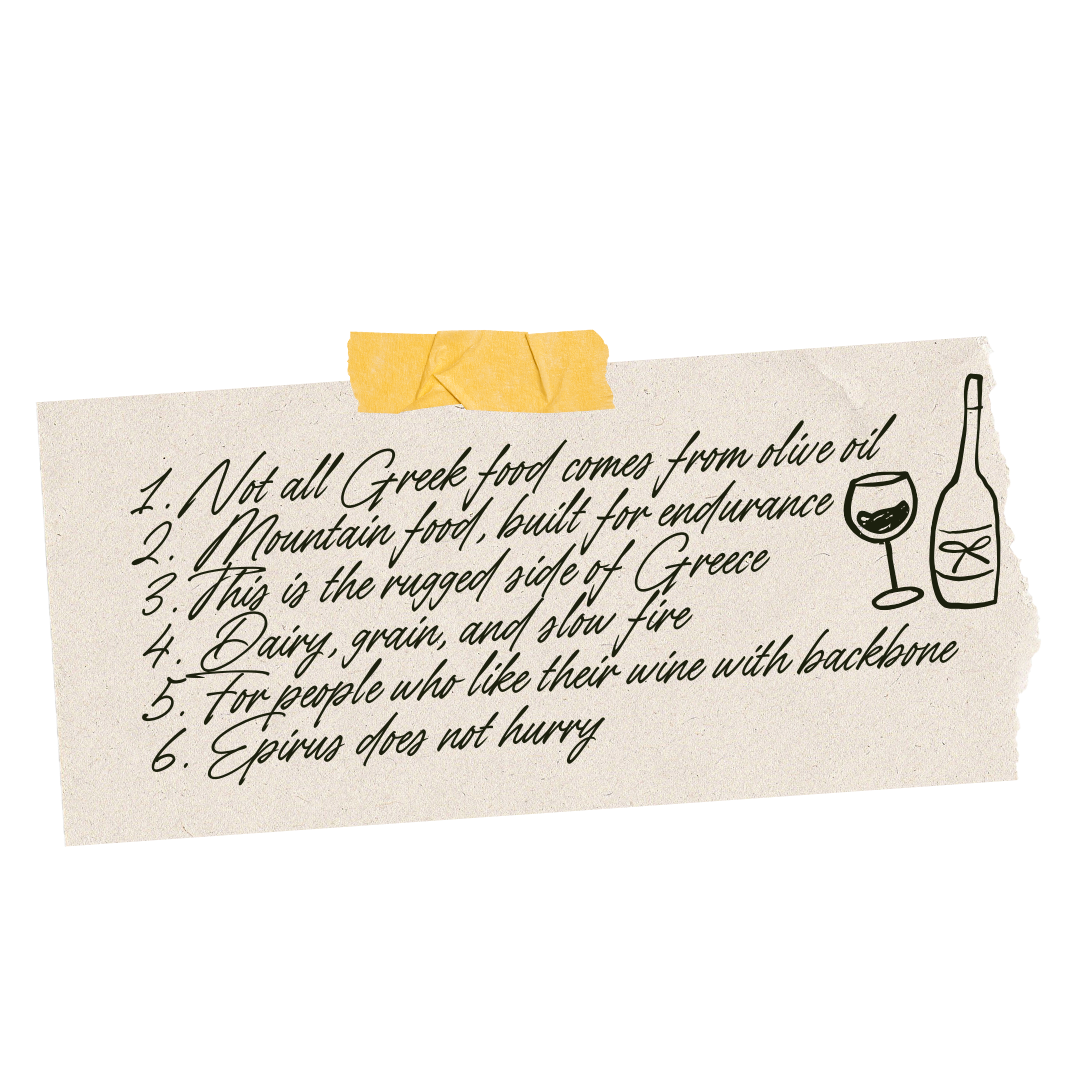
February is when comfort matters most.
When richness feels right.
When food should warm you from the inside out.
Epirus gives us exactly that — without excess, without ornament, without distraction. Just honest cooking, soulful wines, and a reminder that some of the most meaningful flavors come from places that never tried to impress anyone.
Join us this month as we explore Greece’s wild north, one pie, one pour, and one shared table at a time.