
April at Krasi: The Peloponnese — Where Greece Got Its Roots
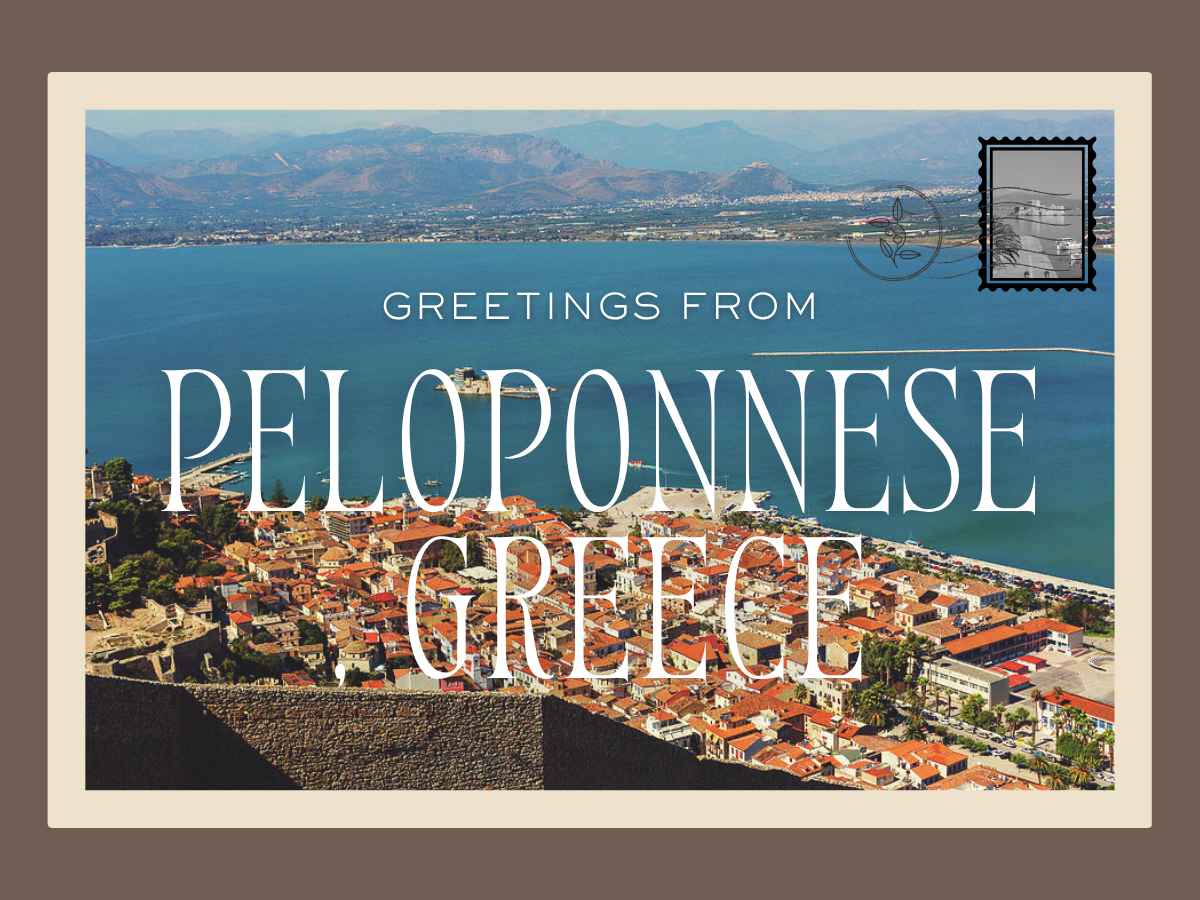
If March took us to Crete, April takes us to the mainland, and to the region that arguably did more to shape Greek identity than anywhere else on the map.
Welcome to the Peloponnese. Birthplace of Sparta. Home of Olympia. The peninsula where olive oil isn't a finishing touch but a founding principle, where citrus shows up in everything from marinades to desserts, and where the vines have been producing wine since Homer was writing about them like they'd always been there. Because they had.
The Peloponnese didn't build a mythology. It just kept living, and eventually, the myths followed.
This month at Krasi, we're honoring one of Greece's most essential regions through dishes rooted in agricultural abundance and honest technique, and wines poured from grapes shaped by mountain altitude, sea air, and centuries of local identity.
A Peninsula That Shaped a Country
The rugged Mani peninsula, where stone towers and sparse terrain shaped one of Greece's most self-sufficient culinary traditions.
Here's what most people get wrong about the Peloponnese: they expect beaches and ancient ruins. What they find is something harder to photograph and more difficult to forget. Rugged mountains that kept communities separate and self-sufficient. Coastlines shaped by three seas, the Aegean, the Ionian, and the Mediterranean, creating a mosaic of microclimates that supports everything from cool aromatic whites to deeply structured reds. Stone villages where history isn't optional. It's in the air.
The mountains formed the people. Independent. Tough. Capable of feeding themselves from what the land provided without asking anything extra from it. The Peloponnese gave Greece Sparta and the Olympics, but it also gave the world some of its most important agricultural traditions. The olive oil from this region is rich, peppery, and deeply green. Many Greeks will simply tell you it's the best in the country. We use it in-house. We believe them.
Argo, the citrus capital of Greece, sits within this region, and its influence follows Peloponnesian cooking everywhere: lemons and oranges pressed into marinades, sauces, dressings, and preserves with the same generosity that olive oil gets poured over everything else. This is honest food, heavy on olive oil, grounded in agriculture, and deeply tied to seasonality. As our own Demetri puts it: probably the closest thing to what people imagine as traditional Greek home cooking at its best.
Spring is when this region peaks. Wild greens push up from hillsides. New lamb is at its best. Citrus is at peak sweetness in its final weeks. The table fills without trying.
In the Glass: A Thousand Meters and a Thousand Years
The Temple of Zeus at Nemea. Agiorgitiko has been grown in this valley for over 2,500 years.
The Peloponnese is Greece's most important wine region, both in size and quality. Full stop. Homer described the land as rich in vines. Ports like Patras and Monemvasia once exported wines across Europe under names that became legend, Mavrodaphne and Malvasia, long before most of the world's modern wine regions existed. Today, it is home to Greece's key PDO and PGI zones including Nemea and Mantinia, and to native varieties like Agiorgitiko, Moschofilero, Roditis, Mavrodaphne, and a handful of others that most of the wine world is still catching up on.

The Mantinia plateau in Arcadia sits at 750 meters. The cool continental climate is what makes Moschofilero here so distinctly alive.
What's alive here right now is just as compelling as what's ancient. A generation of winemakers trained abroad and returned home to high-altitude organic sites, low-intervention cellars, and a renewed commitment to grapes that grow nowhere else. The ampéli of the Peloponnese, its vineyards, are producing some of the most interesting bottles coming out of Greece today. Structured mountain reds. Aromatic whites with real texture. Skin-contact expressions that challenge what you thought you knew about familiar grapes.
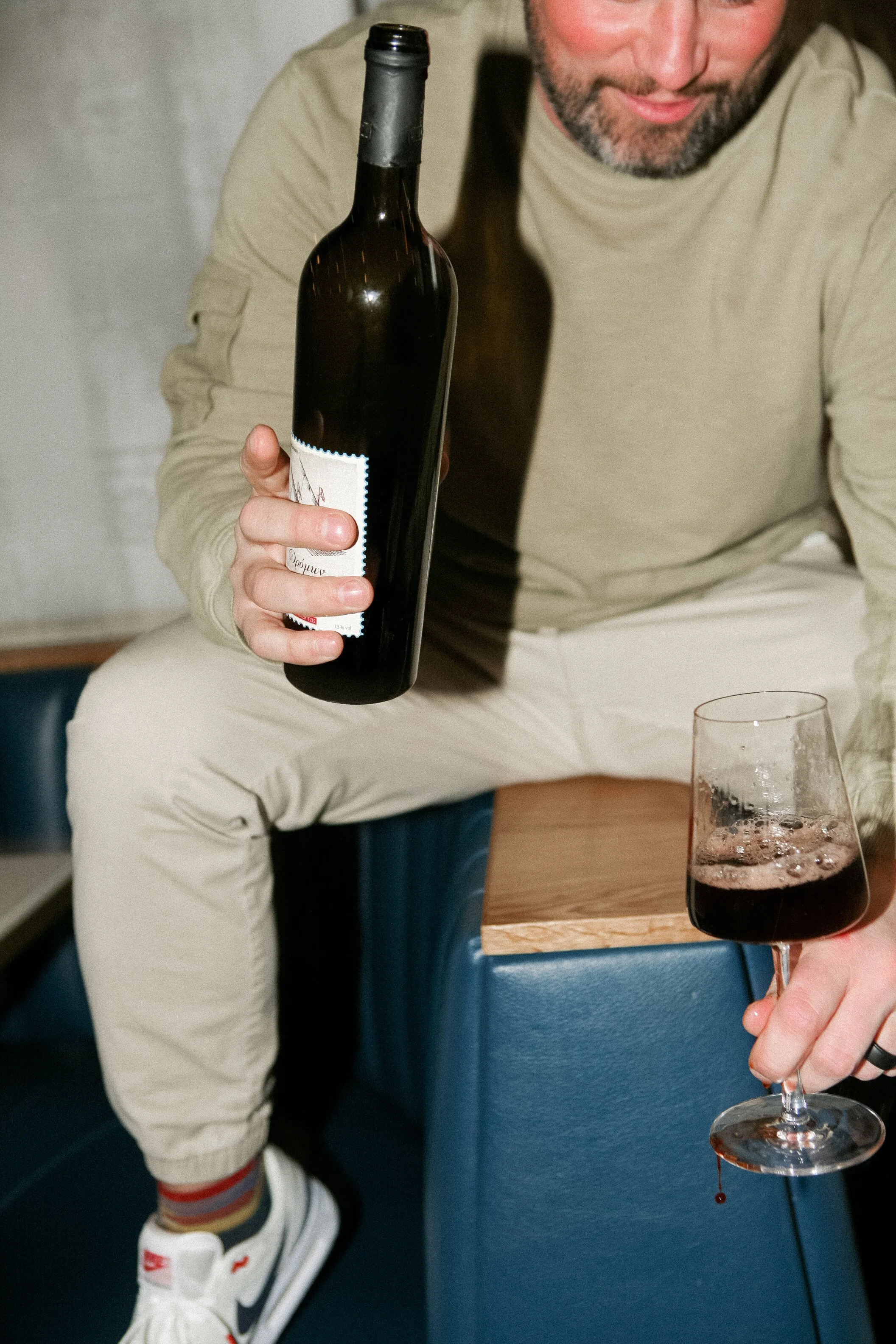
If you like wines that tell you exactly where they're from without being weird about it: this is your month.
Somm note Peloponnesian wines carry quiet power. Altitude without arrogance. Tradition without pretension. They're wines that want to be at the table, not above it. Much like us.

pair it like a pro
-
Fennel, watercress, potatoes, blood orange, capers, green olives, mostarda
Why this exists Mani is the rugged middle finger of the Peloponnese, rocky, sparse, and deeply proud. Fertile land is scarce here, so meals have always been built from what survives the terrain: preserved, foraged, and durable ingredients assembled with care rather than complexity. Salads in Mani were practical before they were anything else. Nourishment first. The blood orange makes this a dish of right now, at the tail end of citrus season, before the window closes.
How we make it at Krasi Potatoes cooked and cooled for structure. Fennel and blood orange lightly macerated. Everything dressed with ladolemono made with orange instead of lemon, emulsified with good olive oil and just enough acid to keep it alive. Built to absorb the dressing, not just carry it.
Chef note The region on a plate. Preserved, foraged, honest.
Pair it with Moschofilero, Tselepos PDO Mantinia 2024
Somm note White flowers and crisp citrus acidity that echo the orange dressing and cut right through the richness of the potato. Tselepos built their entire philosophy around Moschofilero on the Mantinia plateau. This is one of the wines that put this appellation on the modern Greek wine map.
If you like Gewurztraminer or Pinot Gris You'll like this. More mineral, less residual. Built for the table.
-
Fried egg pasta, ramps, spring peas, manouri, olive oil
Why this exists Tsouchti is a Sunday dish. In Mani, this is what households made when they had flour, fresh cheese, and an occasion worth marking. Not a feast-day dish exactly, more like the meal that said: today we're taking our time. Pasta rolled by hand, eggs from the yard, whatever the season had in it. In Mani, abundance through simplicity was never a philosophy. It was just how the pantry worked.
How we make it at Krasi Pasta ribbons rolled by hand to a slightly irregular, rustic texture, the kind that only happens without a machine. Ramps get a quick sauté to preserve their sweetness. Spring peas folded in. Manouri melting into olive oil and pasta starch as it all comes together. The egg fried sunny side up, yolk intact, because the yolk is the sauce. Emulsification through heat, fat, and starch. No separate sauce needed.
Chef note Ramps grow wild in spring on both sides of the Atlantic. Their brief window is the whole point.
Pair it with Roditis, Tetramythos 'Natur' PGI Patras 2022
Somm note Lemon, apple, and stone fruit with a clean mineral edge that cuts through the richness of egg and cheese without overpowering the herbs. Tetramythos grows this on cool, organic north-facing slopes in the northern Peloponnese, proof that Roditis, historically dismissed as a bulk wine, can be something worth paying attention to.
If you like Vermentino or Pinot Grigio You'll like this. Brighter and more textured than either.
-
Braised lamb shoulder, orzo, cinnamon, grated mizithra, tomato sauce
Why this exists Giouvetsi is a Peloponnesian institution. Traditionally a Sunday or feast-day dish prepared at home and brought to a communal village oven to finish baking, which made it both practical and social, a meal that belonged to everyone at the table. Spring lamb is the right lamb for this: tender, clean-flavored, and available right now. The name comes from the clay pot it was cooked in, a vessel tied to Ottoman-era braising traditions that became inseparable from Greek hospitality and abundance.
How we make it at Krasi Lamb shoulder slow-braised until collagen-rich and completely yielding. A tomato braising liquid built deep with garlic, onion, bay, and cinnamon. Orzo added to cook directly in the braise, absorbing fat, gelatin, and acidity until the texture becomes cohesive, almost risotto-like, without the stirring. Finished in the oven to unify. Mizithra grated over the top for salinity, richness, and the unmistakable connection to Peloponnesian dairy tradition.
Chef note One vessel. Everything it needs. Nothing it doesn't.
Pair it with Agiorgitiko, Skouras 'Grande Cuvée' PDO Nemea 2022
Somm note Sour cherry, plum, and spice with a firm structure and acidity that cut right through the braised fat and match the cinnamon's warmth. This comes from one of the highest Agiorgitiko sites in Corinth, showing what happens when cool altitude and the Peloponnese's flagship red grape work together. George Skouras made his first wine in a garage in 1986. It became the first Greek wine sold at auction and the first written about in the New York Times. The ampéli has come a long way.
If you like Softer Bordeaux blends or a brighter Grenache You'll like Agiorgitiko. Warmer and more generous, but structured enough to earn its place.
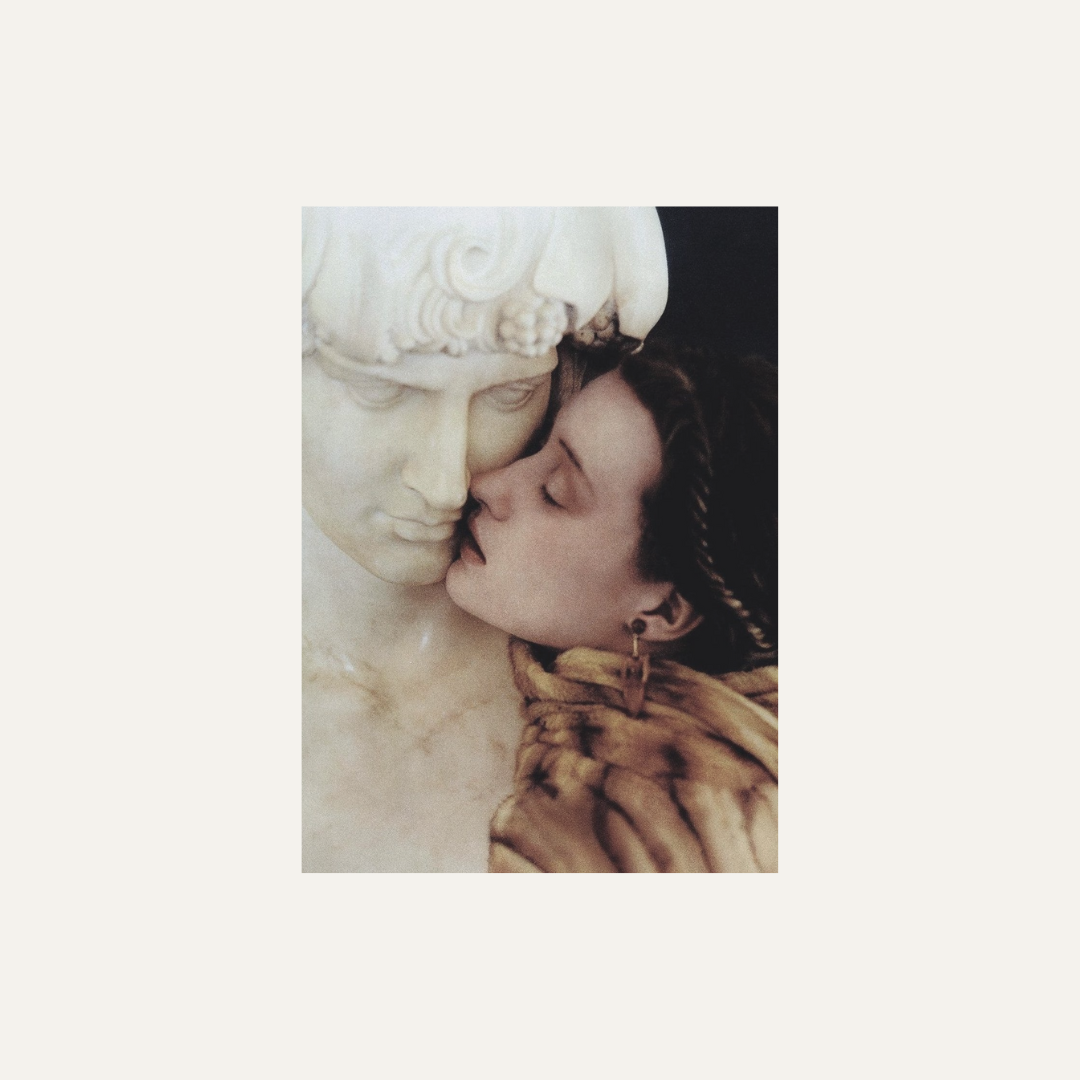
Symposium Wednesdays: The Conversation Continues
Ancient Olympia, where athletes competed and thinkers gathered. The symposium tradition was born in places like this.
Our version of the ancient symposium. Same idea. Better lighting. Fewer togas.
Wednesday, April 2 Taste of the Region A foundation night for the Peloponnese's wine identity. Four grapes, four expressions, one peninsula. Tselepos Moschofilero from the high Mantinia plateau. Tetramythos Roditis from organic north-facing slopes above the Gulf of Corinth, proof that this historically overlooked grape can be something serious. Skouras 'Grande Cuvée' Agiorgitiko from one of the highest sites in Nemea. And Parparoussis 'Taos' Mavrodaphne in its dry, oak-aged form, the version that flips everything you thought you knew about this grape.
Wednesday, April 9 Swirl, Sniff, Send It: Skouras A full evening with one producer who helped write the modern chapter of Peloponnesian wine. George Skouras: started in a garage in 1986. First Greek wine sold at auction. First written about in the New York Times. Tonight's flight moves from the wild yeast-influenced Moschofilero 'Salto' through the coastal, mineral Chardonnay 'Almyra' (the name means salty, and the vineyards sit close enough to the sea to earn it) into the iconic Agiorgitiko/Cabernet Sauvignon Megas Oenos. Closes with Titanas, a rare sundried Mavrostifo sweet wine and the first sweet wine Skouras ever made. Plum, fig, chocolate, and a finish with staying power.
Wednesday, April 16 Cloudy with a Chance of Maceration Four wines built on skin contact, low intervention, and a genuine willingness to be strange in the best way. Tetramythos Agrippiotis, a rare high-acid grape on organic slopes at over 2,000 feet, fermented spontaneously. Markogiannis 'Vorias & Helios' Assyrtiko from heavy clay soils with no filtration, nothing like the Santorinian version you already know. Skouras 'Peplo', a complex rosé with Moschofilero spending a month in clay amphora before blending. And Troupis 'Ekato': 100 days of skin contact on Moschofilero, announcing the grape's aromatics at full volume, drinking like a light red, occupying its own category.
Wednesday, April 23 Vault Week: Pour Decisions Deep cuts only. Parparoussis 'Gift of Dionysos' Sideritis, a grape Anastasia Parparoussis has spent her career protecting and elevating. Troupis 'Hoof & Lur', the younger sibling of Ekato, a skin contact Moschofilero fermented in concrete that reads like something Mantinia drank before labels existed. Tetramythos Volitsa: around 1,000 bottles per year from a half-hectare revived plot, named for the marble-like spherical berries of the varietal. A true rarity in Boston. Closes with Tselepos 'Avlotopi' Cabernet Sauvignon from 750-meter Arcadian estate vineyards, showing how an international variety behaves when the Peloponnese gets the final say.
Why the Peloponnese, Why Now
April is when the season opens. When spring lamb is at its best and wild ramps push up from the ground. When citrus is at peak sweetness in its final weeks.
The Peloponnese gives us exactly this: food rooted in agricultural trust, wines poured from grapes shaped by altitude and sea air, and a region that has never needed to announce itself because it was always already there.
Καλή Ανάσταση. Happy Easter, from our table to yours.
Join us this month as we explore Greece's most essential peninsula, one hand-rolled pasta, one ancient grape, and one shared table at a time.